

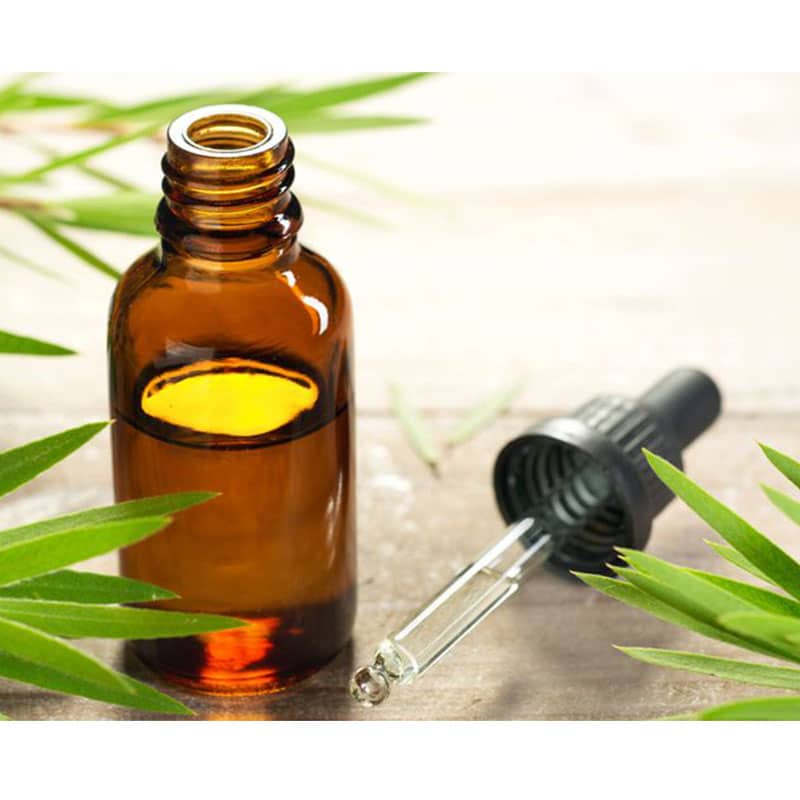
Description
Tea Tree Essential Oil — Antimicrobial Purifier for Acne, Scalp Health & Clarifying Formulations
Tea Tree Essential Oil (Melaleuca alternifolia) is one of the most studied and widely used essential oils in cosmetic formulation, valued for its powerful antimicrobial, antifungal, and anti-inflammatory properties. Steam-distilled from the leaves of the tea tree plant, this lightweight oil plays a critical role in formulations designed to purify, clarify, and restore balance to the skin and scalp.
In formulation science, Tea Tree Oil is best understood as a targeted treatment active, used in low concentrations to support products for acne-prone skin, oily skin regulation, scalp health, and microbial control systems.
At Skin Foodie, Tea Tree Essential Oil is positioned as a precision active, not a fragrance, an ingredient used intentionally to address breakouts, irritation, and imbalance while maintaining overall skin health.
Technical Specifications
INCI: Melaleuca Alternifolia (Tea Tree) Leaf Oil
Origin: United Kingdom
Plant Part: Leaves
Extraction Method: Steam Distillation
Appearance: Thin, clear to pale yellow liquid
Aroma: Fresh, medicinal, woody, camphoraceous
Note: Middle note
Solubility: Oil-soluble
Recommended Usage: 0.1% – 1% (leave-on) | up to 2% (rinse-off)
Why Formulators Love Tea Tree Oil
Potent Antimicrobial Activity
Targets acne-causing bacteria and fungal organisms effectively.
Anti-Inflammatory Support
Helps reduce redness, irritation, and visible inflammation.
Multi-System Use
Works across skin, scalp, and hygiene formulations.
Low Usage, High Impact
Delivers strong results at very low concentrations.
Common Uses in Cosmetic Formulation
Tea Tree Oil is widely used in:
• Acne treatment serums and spot treatments
• Clarifying cleansers and toners
• Scalp treatments and anti-dandruff systems
• Foot care and antifungal formulations
• Natural deodorants
• Cleansing oils and masks
Benefits
Skin Benefits
• Helps reduce acne and breakouts
• Calms redness and irritation
• Supports clearer, more balanced skin
• Assists in managing fungal-related skin issues
Scalp & Hair Benefits
• Helps reduce dandruff and scalp irritation
• Supports a healthier scalp environment
• Assists in controlling excess oil
Formulation Benefits
• Acts as a natural antimicrobial booster
• Enhances product functionality beyond fragrance
• Improves clarity-focused formulations
Pro Tips
Tea Tree Oil should always be treated as an active ingredient, not a fragrance component.
• Use at 0.2–0.5% in leave-on facial products
• Use up to 1% in targeted treatments
• Max 2% in rinse-off products
Always dilute properly in a carrier oil or solubilizer before incorporating into formulations.
For balanced formulations, combine with soothing and barrier-support ingredients like Panthenol or Allantoin to offset potential irritation.
Formulation Pairing — Multiple Intelligent Pathways
Acne Clarifying Serum
Tea Tree Oil + Niacinamide + Zinc PCA + Hyaluronic Acid
→ Oil control + antibacterial + hydration
Scalp Treatment Oil
Tea Tree Oil + Jojoba Oil + Black Seed Oil + Rosemary Oil
→ Anti-dandruff and scalp balancing system
Clarifying Cleanser System
Tea Tree Oil + Decyl Glucoside + Aloe Vera + Glycerin
→ Gentle but effective cleansing
Anti-Blemish Spot Treatment
Tea Tree Oil + Salicylic Acid + Propylene Glycol
→ Targeted breakout control
Ingredient Comparisons & Alternatives
Tea Tree Oil vs Salicylic Acid
Tea Tree provides antimicrobial action, while Salicylic Acid exfoliates and clears pores.
Tea Tree Oil vs Neem Oil
Both are antimicrobial, but Tea Tree is lighter and more formulation-friendly.
Tea Tree Oil vs Benzoyl Peroxide
Tea Tree is a natural alternative, generally milder but slower acting.
Tea Tree Pairs Well With
Tea Tree Oil works effectively with:
• Niacinamide
• Salicylic Acid
• Zinc PCA
• Aloe Vera Extract
• Glycerin
• Jojoba Oil
• Black Seed Oil
• Panthenol
Formulation Inspiration
Clarifying Acne Treatment Serum
Distilled Water — 76%
Niacinamide — 5%
Glycerin — 4%
Zinc PCA — 1% or Azelaic acid 5% (reduce water by 5% if using Azelaic)
Panthenol — 2%
Hyaluronic Acid (1% solution) — 10%
Solubilizer — 1.7%
Tea Tree Essential Oil — 0.3%
FAQs
1. Can Tea Tree Oil be applied directly to the skin?
No. It must always be diluted to prevent irritation.
2. Is Tea Tree Oil safe for sensitive skin?
It can be used at very low concentrations, but patch testing is recommended.
3. Can it be used daily?
Yes, when properly formulated at appropriate usage levels.
4. Does it help with fungal acne?
Yes. Its antifungal properties make it useful in such formulations.
5. Can it be used in hair care?
Yes. It is excellent for scalp health and dandruff control.
Shelf Life & Storage
Store in a cool, dark place, away from direct sunlight.
Transfer to dark glass containers for optimal stability.
The Skin Foodie Formulation Standard
At Skin Foodie, we believe exceptional skincare begins with exceptional ingredients and thoughtful formulation design. Our ingredients are carefully sourced to help formulators create products that are effective, stable, and beautifully balanced.
Because in cosmetic science, selecting the right ingredient is only the beginning, how ingredients are combined is what transforms a formula into a high-performance product.
Disclaimer
For cosmetic formulation use only. Not intended for ingestion or internal use.
Essential oils must be properly diluted before use. Individual sensitivity may occur; patch testing is recommended.

Stella (verified owner) –
Olua Patience (verified owner) –
Was
The scent of this essential tea tree is amazing
I feel like eating it.
It’s very very nice
Mmeri Humphrey (verified owner) –
❤
Mary (verified owner) –
Harrison Chidinma (verified owner) –
Surah Salaudeen (verified owner) –
Funmilola S. (verified owner) –
Stephanie Onyiwa (verified owner) –
Anonymous (verified owner) –
It spilled
Yetunde (verified owner) –
Abigail Nwamina (verified owner) –
Udeh Chiamaka (verified owner) –
Ehita Adedokun (verified owner) –
Anonymous (verified owner) –
Potent
Eric W. (verified owner) –
Good deal.
Mariam (verified owner) –