

Description
Rose Clay (Pink Clay) — Gentle Detox & Glow Mineral for Sensitive, Radiant Skin Formulations
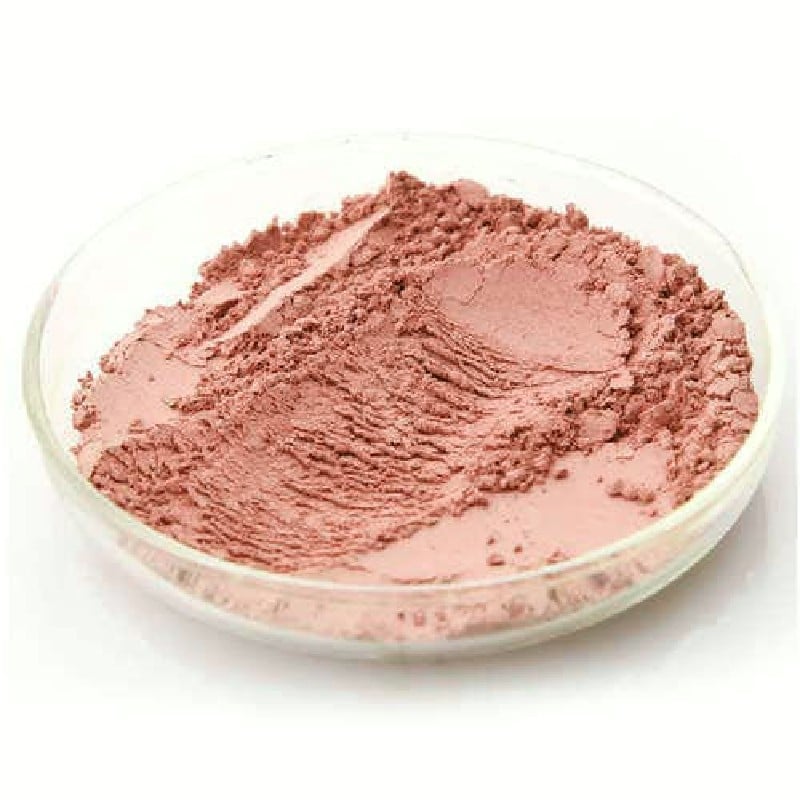
Rose Clay, often referred to as Pink Clay, is a naturally occurring, mineral-rich clay composed primarily of kaolinite, enhanced with trace minerals such as silica and iron oxides that give it its characteristic soft pink hue. It represents the perfect intersection of gentle purification and skin radiance, making it one of the most versatile clays in modern cosmetic formulation.
Unlike more aggressive clays, Rose Clay offers balanced oil absorption, mild exfoliation, and circulation support, without disrupting the skin barrier. This makes it particularly valuable for formulations targeting sensitive, dull, or dehydrated skin that still requires detoxification.
At Skin Foodie, Rose Clay is positioned as a radiance-enhancing clay system, designed for formulators who want visible glow, refined pores, and skin comfort in one elegant ingredient.
Technical Specifications
INCI: Kaolin (and) Iron Oxides (varies by source)
Appearance: Fine pink powder
Composition: Kaolinite-rich clay with naturally occurring minerals
Solubility: Insoluble (dispersible in water)
Phase: Aqueous dispersions / clay systems
Recommended Usage:
• Masks: 20–70%
• Cleansers / scrubs: 5–20%
• Emulsions: 0.5–3%
Skin Type: All skin types, especially sensitive, dry, and dull skin
Why Formulators Love Rose Clay
Gentle Detox Without Barrier Disruption
Absorbs excess oil and impurities without over-drying the skin.
Natural Glow Enhancement
Improves skin tone and radiance through mild exfoliation and circulation support.
Sensitive-Skin Compatibility
Ideal for formulations where stronger clays would cause irritation.
Aesthetic & Functional Dual Benefit
Provides both skin benefits and a beautiful natural pink color in formulations.
Common Uses in Cosmetic Formulation
Rose Clay is widely used in:
• Facial masks and glow treatments
• Gentle cleansers and exfoliants
• Soaps and bath products
• Body masks and spa treatments
• Scrubs and polishing formulations
• Matte creams and tone-refining emulsions
Benefits
Skin Benefits
• Gently removes impurities and excess oil
• Refines pores and smooths skin texture
• Brightens dull complexion
• Supports circulation for a healthy glow
• Helps calm irritation and redness
• Promotes soft, smooth, supple skin
Formulation Benefits
• Adds natural color to products
• Improves texture and sensory profile
• Enables mild exfoliation systems
• Supports oil-balancing formulations
Pro Tips
Rose Clay performs best in hydration-balanced systems.
• Always pair with humectants like Glycerin or Aloe Vera to prevent tightness
• Use as a primary clay for sensitive skin formulations
• Blend with stronger clays (e.g., Bentonite) for customized detox intensity
• Add 0.5–2% to emulsions for oil control and a soft matte finish
Formulation Pairing — Multiple Intelligent Pathways
Glow-Boosting Clay Mask
Rose Clay + Aloe Vera + Honey + Glycerin
→ Hydration + radiance
Gentle Acne Detox Mask
Rose Clay + Kaolin Clay + Niacinamide + Zinc PCA
→ Oil control + calming
Brightening Mask System
Rose Clay + Turmeric Powder + Licorice Extract + Yogurt Powder
→ Tone-evening + glow enhancement
Soft Matte Moisturizer
Rose Clay + Squalane + Niacinamide + Hyaluronic Acid
→ Oil control + hydration balance
Ingredient Comparisons & Alternatives
Rose Clay vs Kaolin Clay
Rose Clay offers added minerals and glow-enhancing properties, while Kaolin is more neutral.
Rose Clay vs Bentonite Clay
Bentonite is more deep-cleansing and aggressive, while Rose Clay is gentle and skin-soothing.
Rose Clay vs French Green Clay
French Green Clay is stronger for oil absorption; Rose Clay is better for sensitive and dry skin.
Rose Clay Pairs Well With
Rose Clay works beautifully with:
• Kaolin Clay
• Bentonite Clay
• Aloe Vera Extract
• Glycerin
• Niacinamide
• Zinc PCA
• Turmeric Powder
• Licorice Extract
Formulation Inspiration
Radiance & Reset Clay Mask
Rose Clay — 40%
Kaolin Clay — 20%
Aloe Vera Extract — 10%
Glycerin — 5%
Distilled Water — 22%
Licorice Extract — 2%
Preservative — 1%
FAQs
1. Is Rose Clay suitable for sensitive skin?
Yes. It is one of the gentlest clays available.
2. Does it dry out the skin?
No, when properly formulated with humectants.
3. Can it help with acne?
Yes. It helps unclog pores and reduce excess oil.
4. Why is it pink?
Its color comes from naturally occurring minerals like iron oxides.
5. Can it be used daily?
Yes, in mild cleansers or low-percentage formulations.
Shelf Life & Storage
Store in a cool, dry place, away from moisture.
Clays have a long shelf life when kept dry and sealed.
The Skin Foodie Formulation Standard
At Skin Foodie, we believe exceptional skincare begins with exceptional ingredients and intelligent formulation design. Our ingredients are carefully sourced to help formulators create products that are effective, stable, and beautifully balanced.
Because in formulation science, selecting the right ingredient is only the beginning, how you combine them is what defines performance.
Disclaimer
For cosmetic formulation use only. Not intended for ingestion or internal use.
Natural variations in color and composition may occur due to mineral origin.

Jennifer D. (verified owner) –
Caroline (verified owner) –
My cult favorite. I’m such a huge fan of rose clay
Yetunde F. (verified owner) –
Ijeoma E. (verified owner) –
Okafor Ebun (verified owner) –
Zainab Isa (verified owner) –
Okorighre Blessing (verified owner) –
Andrea Iroabuchi (verified owner) –
Edidiong (verified owner) –
The Rose Clay Powder is my go to clay mask whenever I desire a mild and gentle cleansing effect. It always delivers.
Efe Tobore (verified owner) –