
Why Humectants Are Essential in Modern Cosmetic Formulation
Whether you are formulating a hydrating facial serum, a rich moisturizer, a curl cream, or a leave-in conditioner, one class of ingredients appears again and again: humectants.
Humectants are among the most important ingredients in both skincare and haircare formulation because they help attract and retain moisture where it is needed most.
For cosmetic formulators, hydration is not simply about adding water to a product. The real challenge is ensuring that water remains available to the skin and hair long enough to improve texture, flexibility, and overall appearance.
Humectants achieve this by binding water molecules and increasing moisture retention in the outer layers of skin and in the hair fiber.
When used correctly, they help:
-
improve skin hydration and elasticity
-
support skin barrier function
-
enhance hair softness and manageability
-
reduce dryness and frizz
-
improve the overall sensory experience of a formula
Understanding how humectants work, and how to combine them effectively, is one of the most important skills any cosmetic formulator can develop.
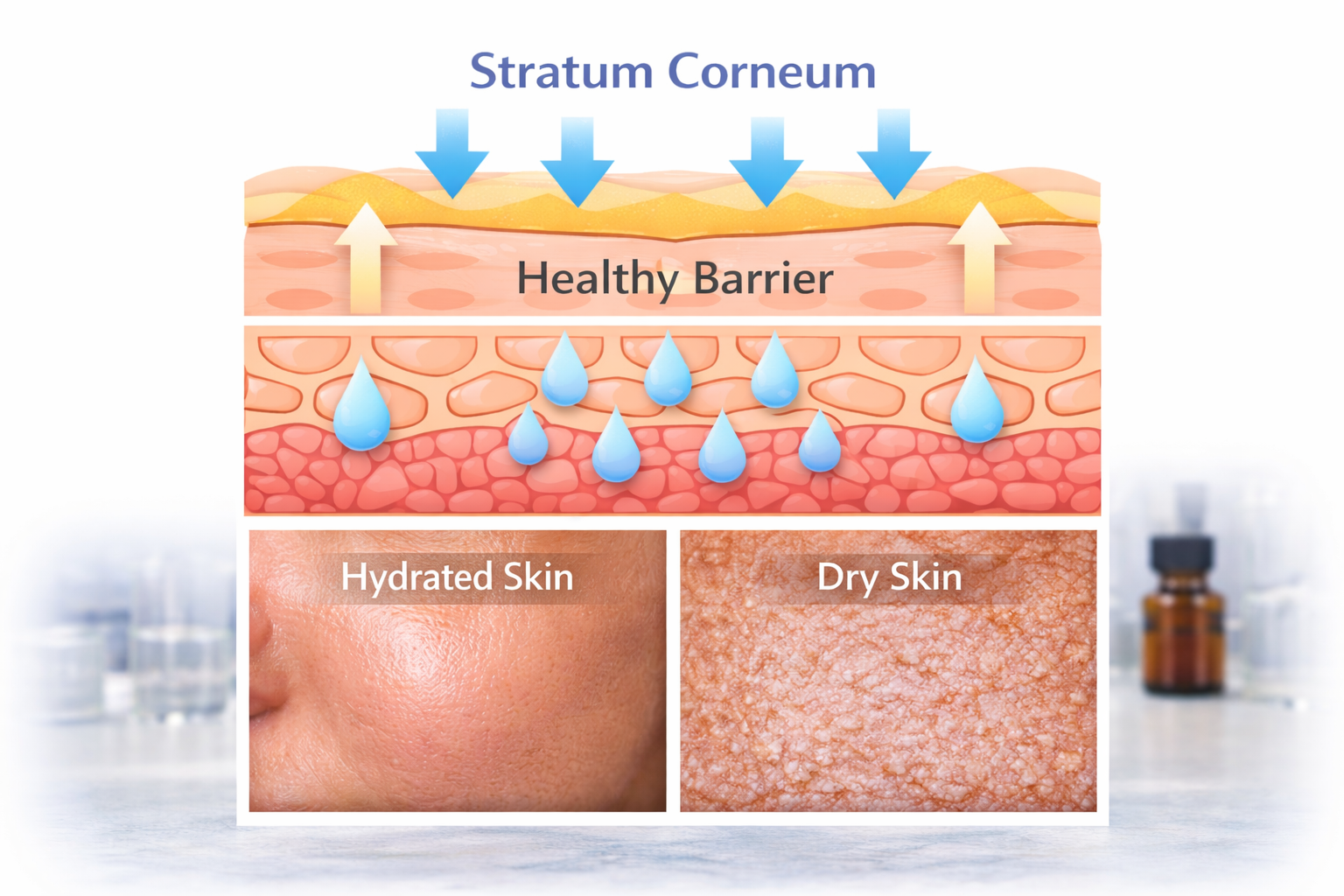
Hydration is the foundation of healthy skin and hair. Humectants help attract and retain water in the outer layers.
What Are Humectants in Cosmetic Formulation?
Humectants are hygroscopic ingredients, meaning they attract and bind water molecules.
They function by drawing moisture from:
-
the surrounding environment (humidity)
-
deeper layers of the skin
-
water present in the formulation itself
This water is then retained within the outer layer of skin (the stratum corneum) or within the hair fiber.
The result is improved hydration, smoother texture, and enhanced light reflection, which contributes to the healthy glow many skincare products promise.
However, humectants rarely work alone in professional formulations. They are usually paired with emollients and occlusives to prevent the moisture they attract from evaporating too quickly.
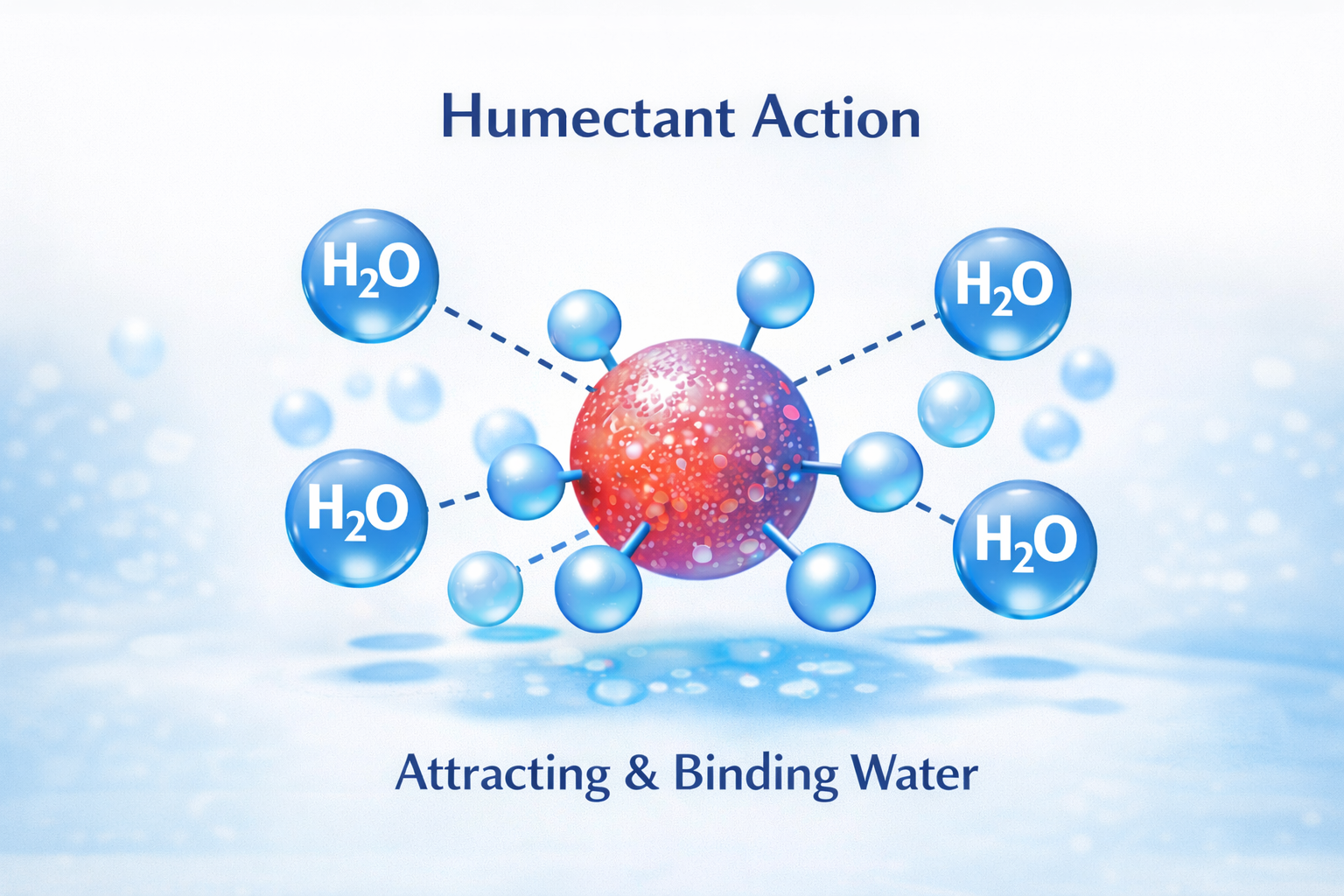
Humectants are hygroscopic molecules that attract and bind water to maintain hydration.
Why Humectants Matter for Formulators
For skincare and haircare formulators, humectants influence several key aspects of product performance.
Hydration Performance
Humectants increase the water content of skin and hair, improving softness and flexibility.
Product Texture
They influence viscosity, slip, and after-feel in serums, lotions, conditioners, and styling products.
Ingredient Delivery
Hydrated skin absorbs active ingredients more efficiently.
Consumer Experience
Products with balanced humectant systems often feel more comfortable and effective on the skin and hair.
Without humectants, many cosmetic formulations would leave the skin feeling tight or the hair feeling dry and brittle.
The Most Important Humectants in Cosmetic Formulation
Below are some of the most widely used humectants in modern skincare and haircare products.
Glycerin: The Gold Standard Humectant
Few cosmetic ingredients are as reliable and well studied as glycerin.
Glycerin has been used in cosmetic formulations for decades because of its exceptional ability to attract and retain water.
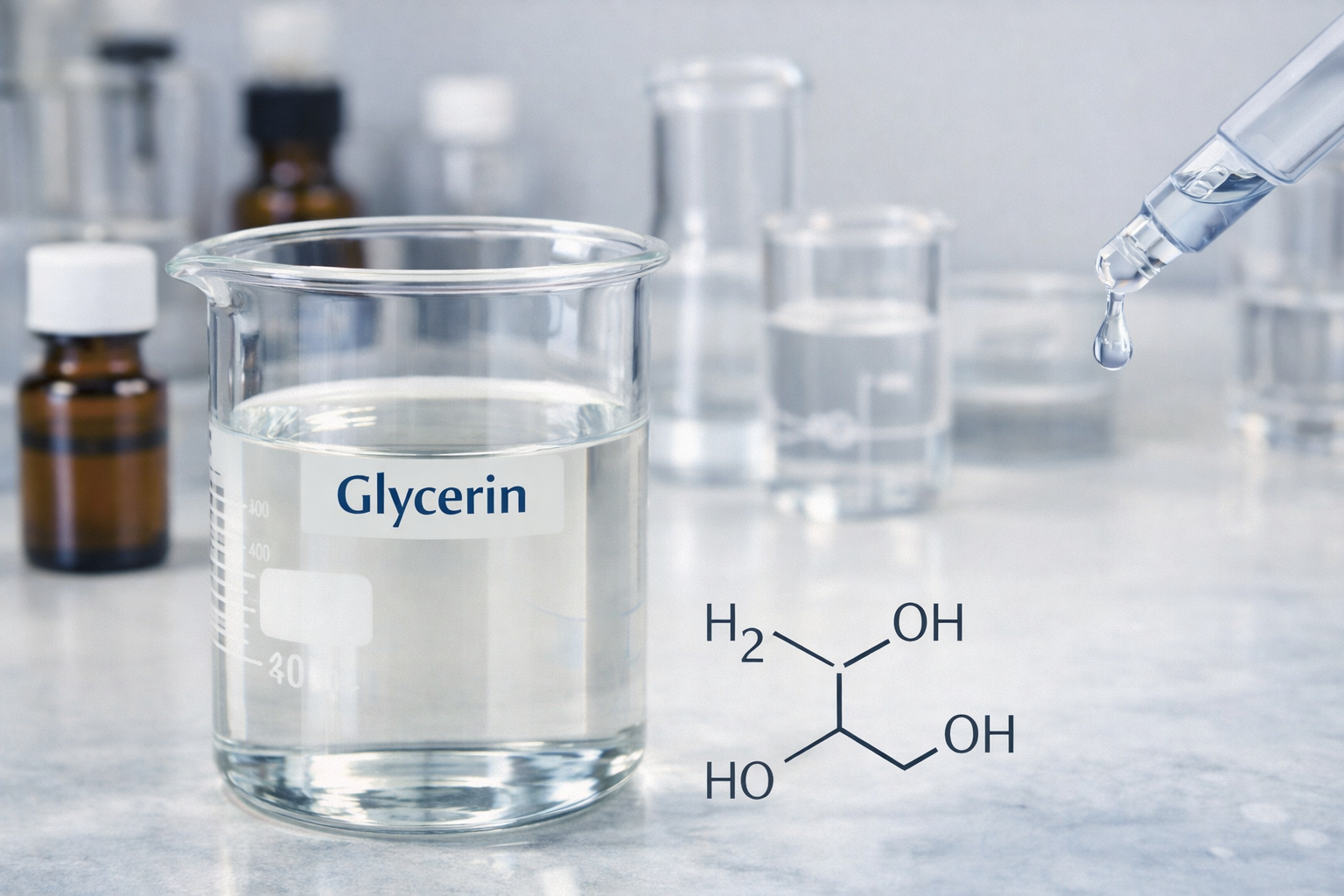
Glycerin is one of the most effective and widely used humectants in skincare and haircare formulations.
Benefits
-
deeply hydrates skin
-
improves barrier resilience
-
enhances skin smoothness
-
reduces roughness and dryness
-
improves hair softness and flexibility
Typical Usage Rate
2–5% in most formulations
Up to 10% in intensive hydration products
Formulation Insight
Glycerin is extremely versatile and works well in both skincare and haircare systems. It is frequently paired with other humectants such as hyaluronic acid and panthenol to create layered hydration systems.
Ingredient reference
Hyaluronic Acid: The Hydration Magnet
Hyaluronic acid is widely known for its ability to bind large amounts of water up to 1000 times its weight.
This makes it one of the most effective ingredients for improving hydration and creating a plumping effect on the skin.
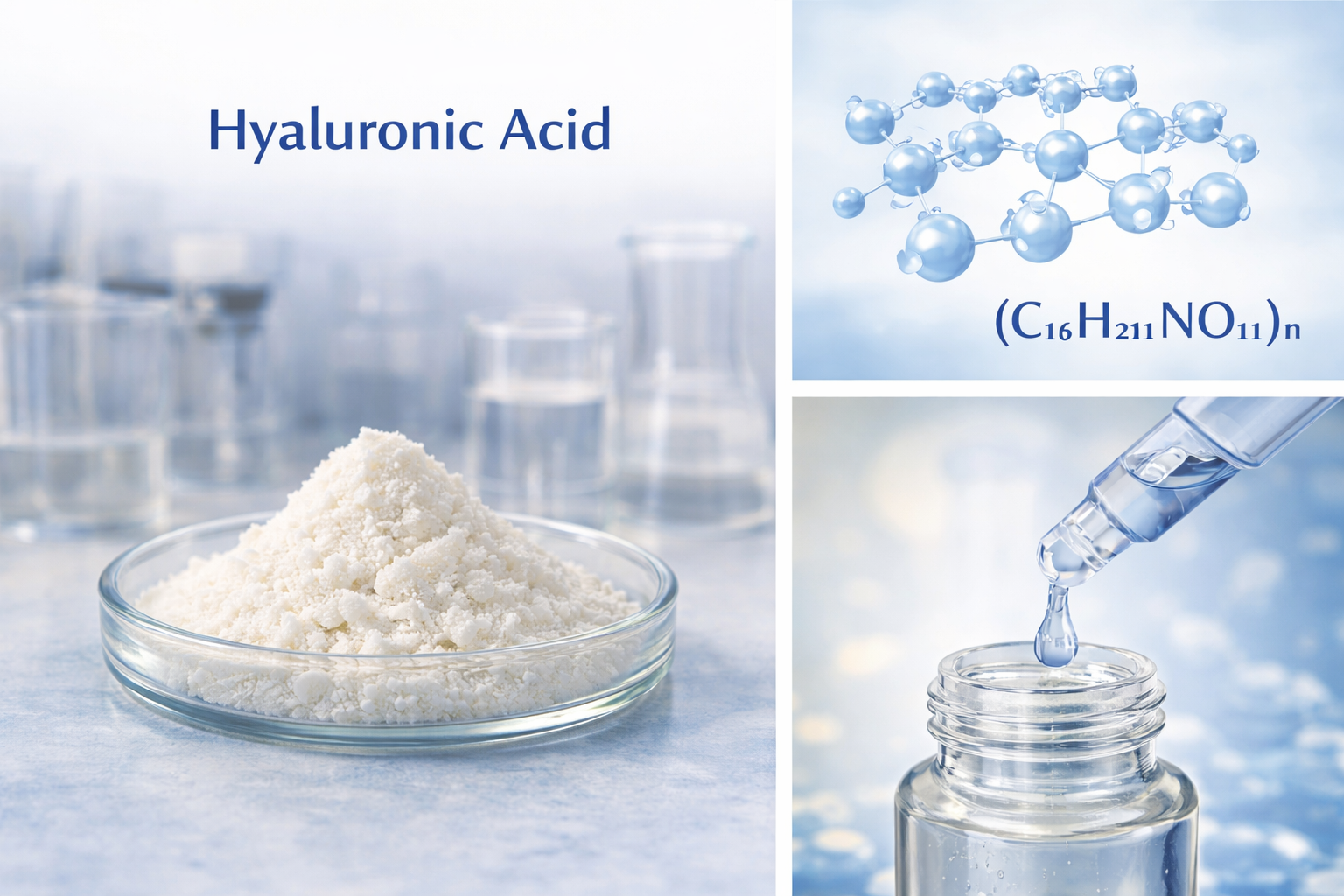
Hyaluronic acid can bind large amounts of water, helping skin appear plump and hydrated.
Benefits
-
deep hydration
-
improved skin elasticity
-
smoother skin appearance
-
enhanced hair moisture retention
Typical Usage Rate
0.1–2%
Different molecular weights provide different benefits. High molecular weight hyaluronic acid hydrates the surface, while lower molecular weights penetrate deeper layers.
Ingredient reference
Panthenol (Vitamin B5): Hydration with Repair Benefits
Panthenol is a multifunctional cosmetic ingredient that acts as both a humectant and soothing agent.
Once absorbed, it converts to pantothenic acid (Vitamin B5), which supports skin barrier repair.
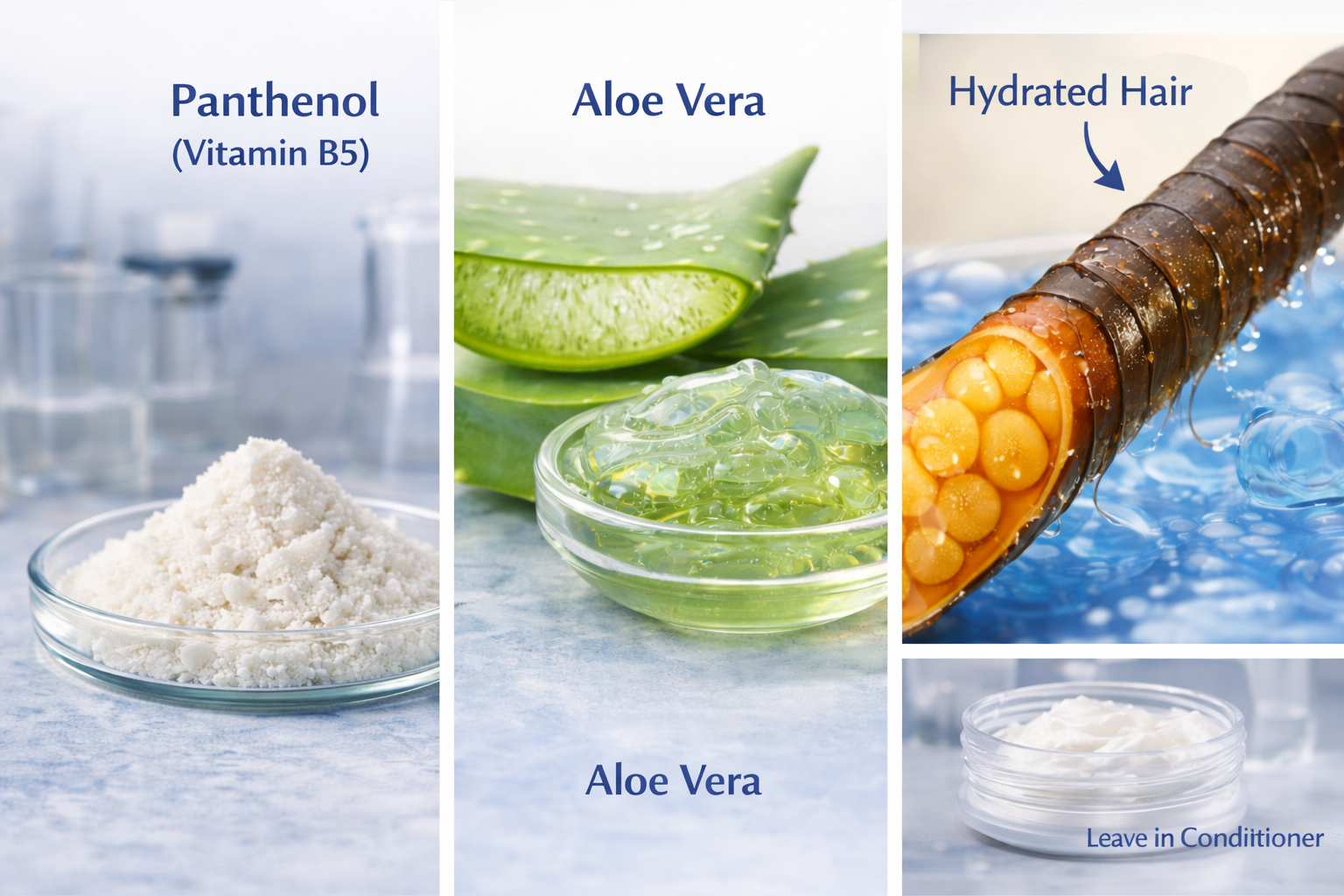
Panthenol and aloe vera hydrate while helping calm irritation in both skin and scalp formulations.
Benefits
-
increases skin hydration
-
improves skin softness
-
reduces irritation
-
strengthens hair and improves elasticity
Typical Usage Rate
1–5%
Panthenol is commonly used in:
-
hydrating serums
-
soothing creams
-
leave-in conditioners
-
hair masks
Ingredient reference
Aloe Vera: Natural Hydration and Soothing
Aloe vera has long been valued for its calming and moisturizing properties.
In cosmetic formulation, aloe works as a mild humectant while also delivering soothing benefits.
Benefits
-
hydrates skin and hair
-
calms irritation
-
reduces redness
-
improves scalp comfort
Typical Usage Rate
5–20% depending on extract concentration.
Ingredient reference
Humectants in Haircare Formulation
Humectants are just as important in haircare as they are in skincare.
Hair fibers naturally lose moisture over time, especially in dry climates or after chemical treatments. Humectants help restore hydration by attracting water into the hair shaft.
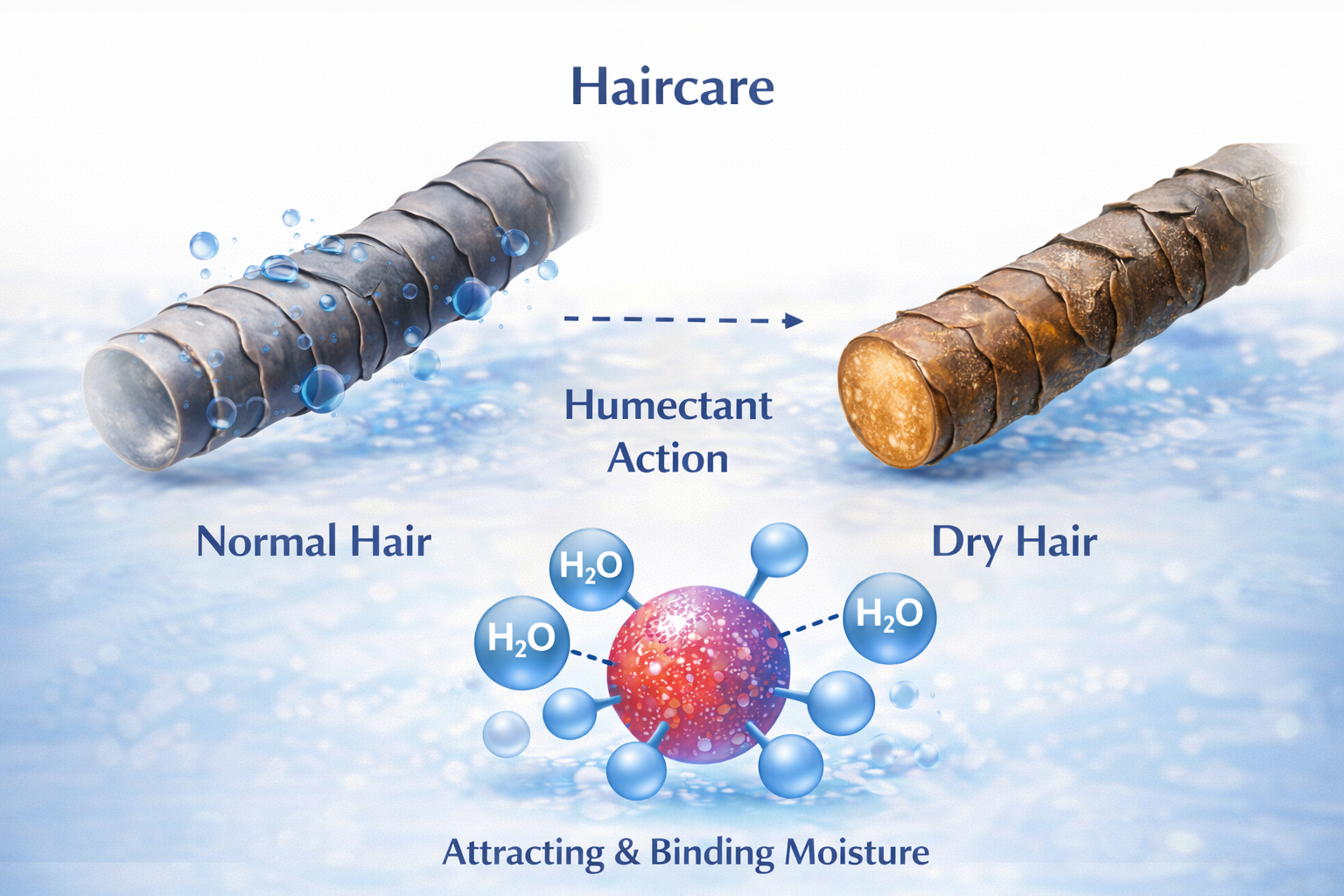
Humectants attract moisture into the hair fiber, improving softness, flexibility, and curl definition.
Key Benefits for Hair
Humectants help:
-
improve hair flexibility
-
reduce brittleness
-
enhance curl definition
-
reduce frizz
-
increase shine
This is why they are commonly used in:
-
leave-in conditioners
-
curl creams
-
hair masks
-
hydrating shampoos
However, formulators must balance humectants carefully in haircare. In extremely humid environments, high humectant levels can sometimes increase frizz by drawing excess moisture from the air.
Best Humectant Combinations for Effective Formulations
Professional cosmetic formulations often combine multiple humectants to achieve multi-level hydration.
Hydration Serum System
Glycerin + Hyaluronic Acid + Panthenol
This combination provides both immediate hydration and longer-term moisture retention.
Barrier Repair System
Glycerin + Panthenol + Niacinamide
Improves hydration while supporting barrier recovery.
Sensitive Skin Hydration System
Aloe Vera + Panthenol + Hyaluronic Acid
Ideal for soothing and calming irritated skin.
Curl Hydration System
Glycerin + Panthenol + Aloe Vera
Provides moisture while improving curl softness and flexibility.
Common Formulation Mistakes with Humectants
Even highly effective ingredients can underperform when used incorrectly.
Using Humectants Without Occlusives
Humectants attract water but do not prevent moisture loss. Pairing them with emollients or occlusive ingredients improves hydration longevity.
Using Excessive Concentrations
High humectant levels may lead to sticky or tacky textures.
Ignoring Climate Conditions
In extremely dry environments, humectants may draw water from deeper skin layers rather than the air.
Balancing them with oils, butters, or occlusive ingredients improves performance.
Where Humectants Appear in Cosmetic Products
Humectants are found in nearly every category of skincare and haircare formulation.
Product Type |
Role of Humectants |
|---|---|
| Facial Serums | Deliver concentrated hydration |
| Moisturizers | Maintain skin moisture balance |
| Facial Cleansers | Prevent post-wash dryness |
| Hair Conditioners | Improve softness and flexibility |
| Leave-in Conditioners | Maintain hair hydration |
Why Humectants Are Foundational Ingredients
Hydration is one of the most important aspects of both skincare and haircare performance.
Without effective humectants, even the most advanced formulations struggle to deliver long-lasting results.
For formulators, cosmetic makers, and DIY enthusiasts, mastering humectant systems is essential for creating products that feel comfortable, perform consistently, and deliver the hydration consumers expect.
Whether you are designing a hydrating facial serum, a soothing moisturizer, or a curl-defining leave-in conditioner, understanding how humectants work will allow you to build more effective and balanced formulations.
