

What antioxidants do
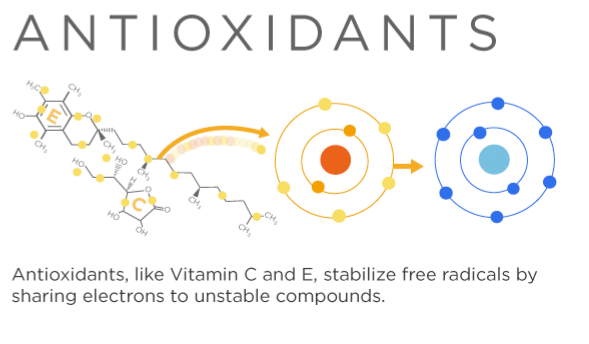
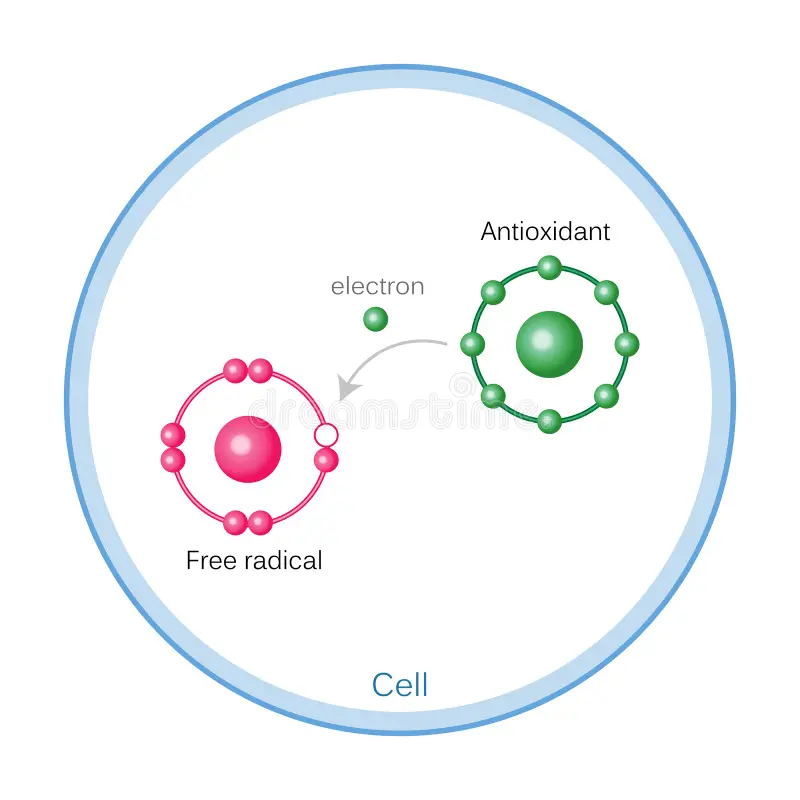
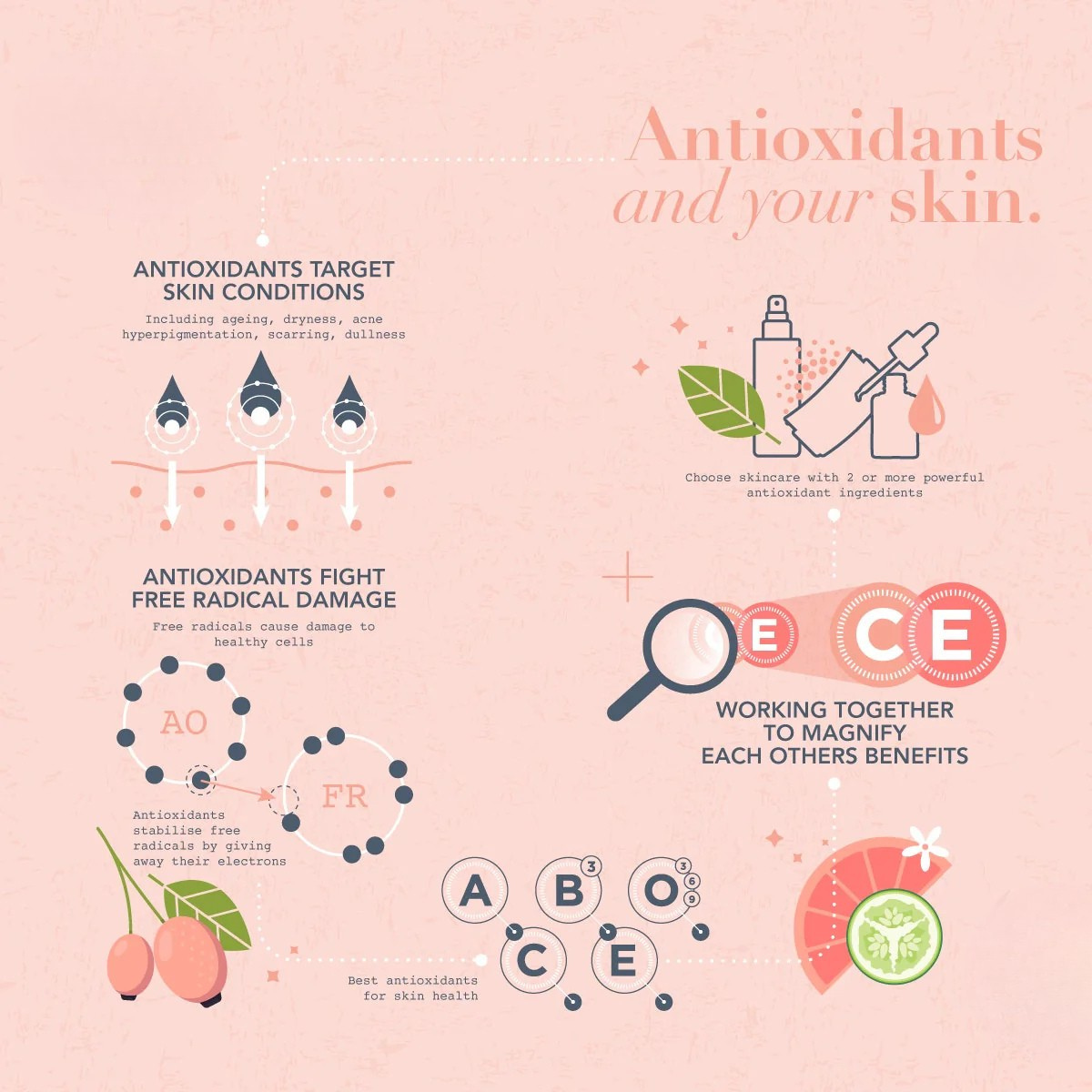
Antioxidants scavenge free radicals, reduce oxidative stress and support repair pathways in skin cells, meaning less photodamage, improved collagen support and brighter tone over time. As a category they’re broad (water- and oil-soluble molecules, enzymes, polyphenols) and each one needs a different formulation approach.
Why Antioxidants Are Every Formulator’s Secret Weapon
If your skincare formula doesn’t include antioxidants, you’re leaving performance (and customer satisfaction) on the table. Antioxidants fight free radicals, reduce oxidative stress, extend product shelf life, and support skin repair.
For formulators, they’re not just buzzwords, they’re functional actives that boost efficacy, consumer appeal, and even product stability. But which ones should you use, at what levels, and in which combos? Let’s dive in.
Popular Antioxidants in Skincare
1) Vitamin C (L-Ascorbic acid + derivatives) – The multitasker
Why formulators love it: Brightening, collagen stimulation, antioxidant protection.
Forms & solubility:
- L-Ascorbic Acid (L-AA) — water-soluble, potent, but unstable, use derivatives for more stability.
- Sodium Ascorbyl Phosphate (SAP) / Magnesium Ascorbyl Phosphate (MAP) — water-soluble derivatives, more stable and gentler.
- Ethyl Ascorbic Acid, Tetrahexyldecyl Ascorbate (THD) — more stable, skin-friendly derivatives (ethyl = water-compatible; THD = oil-soluble).
- Ascorbyl palmitate: oil-soluble derivative; excellent for balms, serums & anhydrous systems)
Typical usage & pH:
- L-Ascorbic Acid: commonly formulated ~ 10–20% for visible effect; requires low pH (~≤3.5) for optimal skin uptake (but watch for irritation).
- SAP / MAP: effective at ~0.2–5% (SAP often used ~1–3% in many products; MAP typical 0.2–3%).
- Ethyl/THD: lower % needed — ~0.1–5% (THD may be beneficial at low %; some brands use up to higher levels depending on claim).
Formulation tips:
- L-AA oxidizes quickly (color change). Use opaque, air-restricted packaging, antioxidants (Vit E) and chelators (EDTA).
- The classic synergy: Vitamin C + Vitamin E (tocopherol) + Ferulic acid improves stability and doubles photoprotection compared with Vitamin C+E alone, that’s why the combo is a formulation staple. For stable L-AA serums keep pH low and pair with ferulic + tocopherol.
Best combos & usage notes:
- L-AA + Ferulic + Vit E = powerful daytime antioxidant serum (but protect with SPF).
- Use SAP/MAP if you need a gentler, higher-pH product for sensitive skin or leave-on moisturizers.
- Oil-soluble THD and Ascorbly palmitate works nicely in serums and oil phases and are less pH-dependent.
Shop options available at Skin Foodie:
- L-Ascorbic Acid
- Magnesium Ascorbyl Phosphate (MAP)
- Sodium Ascorbyl Phosphate (SAP)
- Ascorbyl Palmitate(oil-soluble derivative; excellent for balms, serums & anhydrous systems).
2) DMAE (Dimethylaminoethanol) — the “firming-ish” antioxidant
What it does: Skin-firming, mild antioxidant/anti-inflammatory effects and sometimes improves appearance of lines (mechanism includes membrane/acetylcholine-related pathways).
Usage: Clinical work has used ~1-3% DMAE topical gels with measurable improvements in firmness and fine lines, with a reasonable safety profile in those studies. Start at lower % for sensitive skin and patch test.
Why it works: Firming agent, improves skin tone, reduces fine lines.
Formulation tips:
- DMAE is usually added to the aqueous phase and works nicely with peptides and hyaluronic acid.
- Introduce slowly when pairing with strong actives (retinoids, AHAs) to watch for irritation; some formulators pair DMAE with humectants and soothing bases to improve tolerance.
- Synergizes well with Vitamin C in anti-aging formulas.
3) Caffeine — the wake-up antioxidant
What it does: Has antioxidant and anti-inflammatory effects, improves microcirculation (useful for puffiness) and can contribute to temporary de-congestion under the eye.
Why it works: Antioxidant and anti-inflammatory. Reduces puffiness, dark circles, and improves microcirculation.
Typical usage: Commercial topicals commonly contain ~1–3% caffeine (3% is a common benchmark in eye and de-puffing gels). Effects for cellulite claims vary and are often temporary.
Formulation tips:
- Caffeine is water-soluble — easy to formulate into gels, serums and eye creams.
- Great combo: Caffeine + Vitamin C (stable derivative) + hyaluronic acid for morning products that brighten + de-puff. (Caffeine won’t chemically “break” vitamin C; they can be complementary.
- Perfect in eye creams, serums & body gels.
4) CoQ10 (Ubiquinone / Ubiquinol) — mitochondrial antioxidant
What it does: Lipid-soluble antioxidant that supports mitochondrial energy production and reduces oxidative damage; levels in skin fall with age and UV exposure. Topical CoQ10 can raise skin Q10 levels and help with photoprotection and signs of aging.
Why it works: Lipid-soluble antioxidant, protects against photoaging, supports cell energy.
Typical usage: Efficacy studies and formulations vary, clinical formulas have used low fractions (reports show benefit with topical 0.3%–1% in some trials), while ingredient guidance often notes benefit even at very low levels (e.g., 0.02–0.05% can be functionally active in some systems).
Consider 0.05–0.5% as a practical range for serums and creams (adjust as needed).
Formulation tips:
- CoQ10 is oil-soluble and often requires solubilization strategies depending on form (oil phase, microemulsions, liposomes, nano-vehicles) to improve skin delivery.
- Combine with other lipid antioxidants (tocopherols) and use encapsulation to boost penetration where available.
- Oil-soluble, so it works best in emulsions and serums.
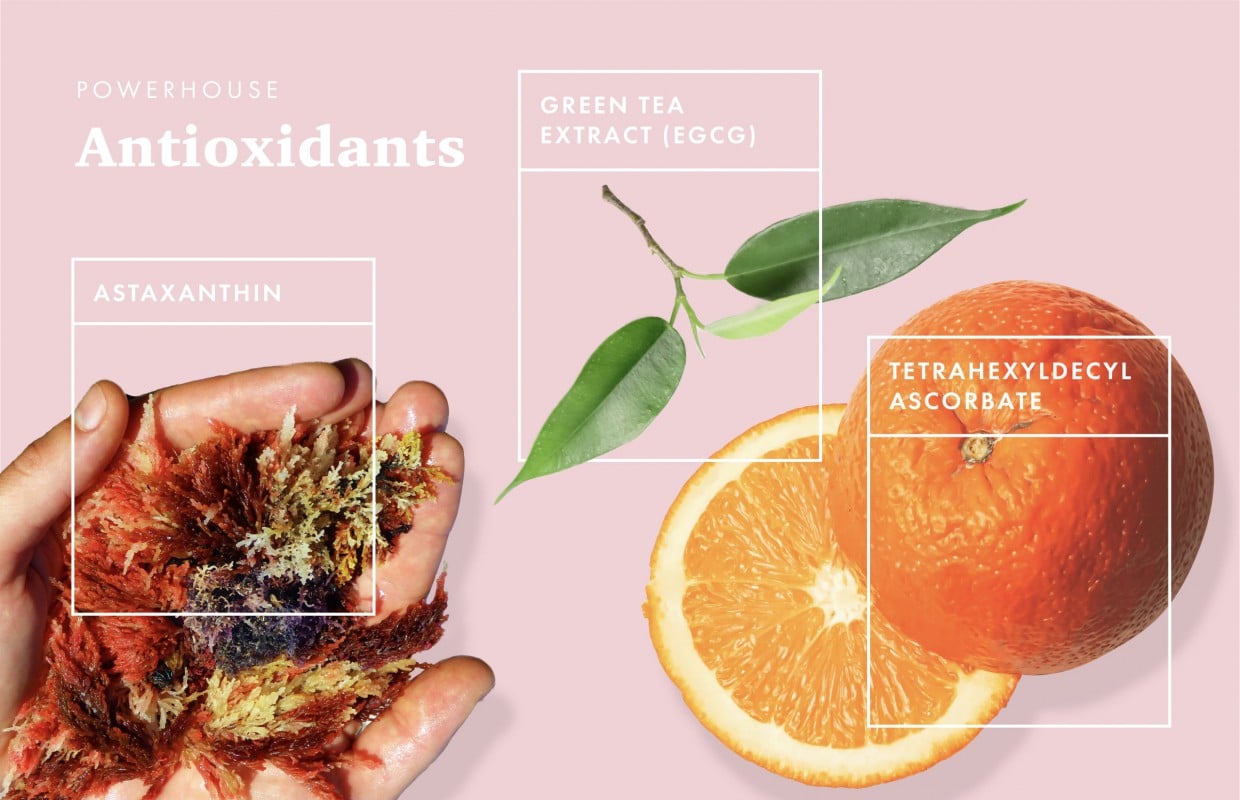
5) Green Tea (EGCG), Resveratrol, Astaxanthin — the polyphenol crew
Why they matter: Polyphenols are powerful antioxidants and anti-inflammatories; EGCG (green tea) is helpful in calming redness, acne-prone skin and photoprotection, while resveratrol is a potent anti-aging polyphenol (often used at ~0.25–1%).
Formulation tips:
- EGCG is sensitive (light/heat), so protect from oxidation and package accordingly.
- Many polyphenols need delivery systems (liposomes, encapsulation) to increase skin uptake.
Green Tea Extract (EGCG)
- Why it works: Rich in polyphenols, combats redness and oxidative stress.
- Usage rate: 2–5%. (depends on form)
- Formulation tip: Excellent in calming serums and acne-prone skincare.
Resveratrol
- Why it works: Potent anti-aging, brightening, anti-inflammatory.
- Usage rate: 0.5–1%.
- Formulation tip: Great partner for Niacinamide in antioxidant blends.
6) Vitamin E (Tocopherol)
- Why it works: Moisturizes, protects oils from rancidity, strengthens skin barrier.
- Usage rate: 0.5–2%.
- Formulation tip: Pair with Vitamin C for synergistic effects.
Shop Vitamin E (Full Spectrum)
7) Niacinamide (Vitamin B3) — the multitasking brightener & barrier booster
What it does: A true all-rounder. Niacinamide supports skin barrier repair (by boosting ceramide synthesis), regulates sebum, brightens uneven tone, calms redness, and even improves the appearance of pores. Perfect for oily, acne-prone, or sensitive skin formulations.
Usage: Studies support effectiveness at 2–5%, with good tolerability in most skin types. Higher concentrations (up to 10%) can be used but watch for irritation in sensitive users. Niacinamide has a strong evidence base, including randomized controlled trials showing improvements in hyperpigmentation, barrier function, and oil regulation.
Formulation tips:
- Water-soluble and stable across a pH of ~5–7, making it formulator-friendly.
- Works nicely with humectants (like hyaluronic acid) and soothing agents (panthenol, aloe vera).
- Once thought incompatible with Vitamin C, but modern studies show they can co-exist in well-formulated systems.
- Great in serums, toners, moisturizers, and emulsions.
Quick Reference Table — Antioxidant Forms, Solubility & Usage Ranges
| Antioxidant | Form | Solubility | Usage Range | Notes |
| L-Ascorbic Acid | Pure Vitamin C | Water-soluble | 5–20% | Potent but unstable. low-pH ≤3.5 for uptake; best in water-based serums. |
| Magnesium Ascorbyl Phosphate (MAP) | Stable Vitamin C derivative | Water-soluble | 1–5% | Gentler; brightening without low pH. Stable at neutral-to-slightly alkaline pH. |
| Sodium Ascorbyl Phosphate (SAP) | Stable Vitamin C derivative | Water-soluble | 1–5% | Good for acne-prone, antioxidant + antimicrobial properties. Stable, hydrating |
| Ascorbyl Palmitate | Fat-soluble Vitamin C ester | Oil-soluble | 0.5–2% | Stable in oils; great in balms, emulsions, and oils. More pH-flexible |
| Ethyl / THD Ascorbate | Ester (ethyl = water-compatible; THD = oil) | Oil/water (depends) | 0.5–5% (THD often 0.1–2% for maintenance) | More pH-flexible |
| Niacinamide (Vitamin B3) | Stable vitamin | Water-soluble | 2–5% | Brightens, repairs barrier, reduces oiliness. |
| DMAE | Amino alcohol | Water-soluble | 1–3% (Studies at 3%) | Firming effect; often paired with antioxidants. Use with caution in sensitive skin |
| Caffeine | Alkaloid | Water-soluble | 0.5–3% | Reduces puffiness, antioxidant support.
Water phase; good AM active. |
| Coenzyme Q10 (CoQ10) | Ubiquinone | Oil-soluble | 0.1–1% | Anti-aging powerhouse, works well in emulsions + oils. |
| Vitamin E (Tocopherols) | Fat-soluble vitamin | Oil-soluble | 0.5–2% | Protects oils from rancidity, boosts skin barrier. |
| Green Tea Extract | Polyphenol-rich | Water-soluble (sometimes glycerin-based) | 1–5% (depends on extract potency) | Anti-inflammatory + antioxidant; pairs well with Vitamin C. Sensitive to heat/light |
Ingredient pairings (formulation-ready)
- Brightening day serum: L-AA (10–15%) + Vit E (0.5–1%) + Ferulic (0.5%) + hyaluronic acid — low pH, airless amber bottle.
- Gentle daily antioxidant: SAP/MAP (1–3%) + niacinamide + panthenol — neutral pH, hydrating base.
- Eye de-puffing gel: Caffeine (1–3%) + low % ethyl ascorbic acid + cooling humectants.
- Night recovery serum: CoQ10 (0.1–0.3%) in oil or lipid carrier + peptide blend.
Combining Antioxidants for Maximum Efficacy
- Vitamin C + Vitamin E + Ferulic Acid → Gold standard combo for anti-aging and photoprotection.
- Niacinamide + Ascorbyl Palmitate → Brightening and barrier-supporting blend.
- Caffeine + Green Tea Extract → Anti-inflammatory powerhouse for eye and calming products.
- CoQ10 + Vitamin E → Perfect for oil-based serums that fight oxidative stress.
Best practice formulation checklist.
- Match the form to the vehicle: water-soluble antioxidants belong in water phases; oil-soluble ones in oil phases or solubilized via carriers.
- pH control: know your active’s preferred pH (L-AA needs low pH; SAP/MAP need neutral-to-slightly alkaline).
- Chelate & protect: add chelators to slow metal-catalyzed oxidation.
- Package well: airless or amber glass, nitrogen flush, minimal headspace.
- Pair smart: use proven synergies (C + E + ferulic) and avoid cocktails that could cause chemical conflict.
- Stability test early: accelerated oxidation tests, elevated temp and light, and real-time shelf checks, don’t rely on intuition.
- Delivery tools: consider liposomes, solid lipid nanoparticles or microemulsions for large/lipophilic antioxidants (CoQ10, resveratrol, astaxanthin)
Common formulator problems — and how to fix them
- Problem: Serum browns within a short time. → wrong vitamin C form / exposure to air & light. Use stable derivative and antioxidant stabilizer + airless packaging.
- Problem: Product flares irritation with retinol. → separate actives by time of day OR use gentler derivatives (THD / SAP) and prioritize barrier-supporting options.
- Problem: Antioxidant feels ineffective on skin. → check solubility, delivery system and concentration (are you using 0.1% when the active needs 1–5%?).
- Efficacy Proof→ Antioxidant blends not only boost skin health but also enhance your marketing claims
- Stability Issues→ Use derivatives like MAP, SAP, or Ascorbyl Palmitate for long shelf life.
- Compatibility → Always consider pH and solubility e.g Niacinamide prefers neutral pH, while L-Ascorbic Acid likes acidic,
- Oil vs Water Solubility→ Choose antioxidants based on your system type (e.g., CoQ10 for oils, MAP for water).
- Consumer Messaging→ Educate with clear product messaging, translate science into claims (“brightening,” “anti-aging,” “firming”).
FAQs (for formulators who skim 🙂 )
Q: Can I mix Vitamin C and niacinamide?
A: Modern evidence shows they can coexist if pH and formulation are controlled; using derivatives can further reduce reactivity issues. (Use good formulation practice.)
Q: Which antioxidant should be in AM vs PM?
A: Many formulators put protective antioxidants (Vitamin C + E + ferulic) AM to neutralize daytime radicals; reparative antioxidants (CoQ10, gentle polyphenols, DMAE) can work PM. But many antioxidants are fine for both AM and PM.
Q: Why does my antioxidant pill or separate when I layer products?
A: Solubility mismatch or film-forming ingredients can cause pilling, match solvents and textures, or reformulate with better solubilizers/film modifiers (e.g., Caprylyl/Capryl Glucoside, hyaluronic esters).
Antioxidants are headline grabbers, but their promise only becomes reality when you apply formulation discipline: choose the right form, hit the right usage window, protect the chemistry, and pick delivery systems that actually get the molecules where they belong. For formulators and DIYers: start with one or two hero antioxidants per product, validate stability early, and iterate with packaging in mind.
Antioxidants are the backbone of effective, future-proof formulations. Whether you’re developing a brightening serum, a calming cream, or an anti-aging powerhouse, choosing the right antioxidant (or combo) will set your formula apart.
Think of antioxidants as your formula’s insurance policy, they protect your product and your customer’s skin.
